
Learn essential tips for driving in the mountains, including safe speeds, steep roads, sharp curves, changing weather, vehicle preparation, and more.
Driving through the mountains can be one of the most memorable parts of a journey. Mountain roads offer spectacular scenery, remote villages, dramatic valleys, and unforgettable views, but they also require more attention than ordinary roads. If you are planning a mountain adventure in Central Asia, travelers can also consider car with a driver in Kyrgyzstan for a more relaxed way to explore challenging mountain routes.
What You'll Discover:
Check Your Car Before Starting
Before heading into the mountains, take a few minutes to check the vehicle. Make sure the tires have sufficient tread and are properly inflated. Check the brakes, headlights, windshield wipers, fluids, and fuel level.
A small problem that may be manageable in a city can become much more serious on an isolated mountain road. It is also important to make sure you have a spare tire and the basic equipment needed in case of an unexpected breakdown.
If you are renting a vehicle, ask about the car’s condition and whether it is suitable for the roads you plan to travel.
Reduce Your Speed
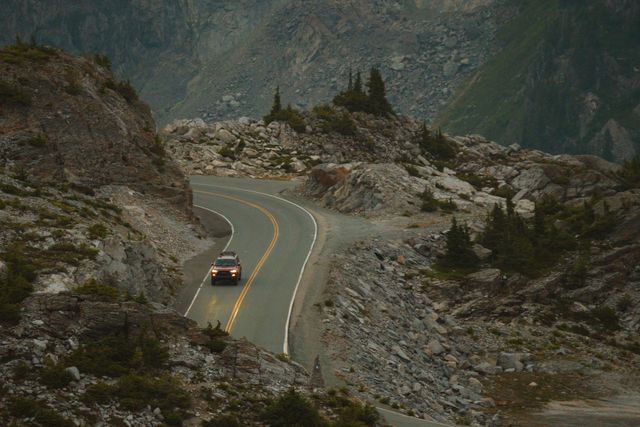
Mountain roads often include sharp curves, narrow sections, steep climbs, and sudden changes in road conditions. Driving too quickly reduces the amount of time you have to react.
A safe speed depends on the road, weather, visibility, traffic, and vehicle. Instead of focusing on a specific speed, drive at a pace that allows you to remain in complete control.
Slow down before approaching a bend rather than braking heavily in the middle of it. This gives you more stability and better visibility.
Use Lower Gears on Steep Roads
When driving uphill, your vehicle may need more power. Using an appropriate lower gear can help maintain steady engine performance.
Downhill driving requires particular attention. Constantly pressing the brake pedal on a long descent can cause the brakes to become excessively hot. Using a lower gear can help control the vehicle’s speed while reducing reliance on the brakes.
Drivers unfamiliar with manual transmissions should learn how the vehicle’s gears work before tackling steep mountain roads.
Keep a Safe Distance
Mountain roads can require sudden braking. A vehicle ahead may slow down for a sharp corner, an animal, a rock, or another vehicle approaching from the opposite direction.
Keeping a generous distance gives you additional time to react. Avoid following other vehicles too closely, especially on steep descents or roads with limited visibility.
Remember that stopping distances can increase significantly on wet, icy, snowy, or gravel-covered surfaces.
Be Careful Around Sharp Curves
Many mountain roads have blind corners where you cannot see approaching traffic. Slow down before entering the curve and stay within your lane.
Never assume that an empty-looking road is completely clear. Another vehicle may appear suddenly from the opposite direction.
On very narrow roads, be prepared to stop safely if necessary. Avoid making risky overtaking maneuvers near bends, steep drops, or areas with limited visibility.
Watch the Weather
Mountain weather can change quickly. A sunny morning does not necessarily mean conditions will remain the same throughout the day.
Rain can make roads slippery, while snow and ice can create significantly more challenging conditions. Fog can reduce visibility within minutes, particularly at higher elevations.
Before leaving, check the weather forecast and road conditions. If conditions deteriorate significantly, consider delaying your journey rather than continuing simply because you have already started.
Prepare for Limited Services
Remote mountain routes may have few fuel stations, restaurants, repair shops, or mobile phone services.
Fill the fuel tank before entering remote areas and carry enough drinking water and food for the journey. It is also sensible to have a charged phone, a power bank, and offline maps.
Let someone know your planned route when traveling through particularly isolated areas. Knowing where you are going and when you expect to arrive provides an additional layer of safety.
Watch for Animals and Rockfalls
Mountain roads are shared not only with other drivers but also with wildlife and domestic animals. Horses, cows, sheep, and other animals can sometimes appear unexpectedly near the road.
Slow down when approaching areas where animals are present and avoid sudden movements that could frighten them.
Rockfalls are another potential hazard. After heavy rain, freezing temperatures, or other changes in weather, loose stones can appear on the road. Keep your attention focused ahead and be prepared to reduce your speed.
Take Breaks During Long Drives
Mountain driving requires concentration, especially when roads are winding for several hours.
Take regular breaks to stretch, drink water, and rest your eyes. Avoid continuing if you feel tired.
Fatigue can affect reaction time and concentration just as seriously as driving in difficult weather. On long mountain journeys, arriving later is preferable to taking unnecessary risks.
Consider a Local Driver
For travelers who are unfamiliar with mountain roads, hiring an experienced local driver can make the journey considerably easier.
A local driver may already be familiar with the route, road conditions, weather patterns, mountain passes, and areas where additional caution is required. This allows passengers to concentrate on enjoying the scenery instead of constantly managing the road.
This can be particularly useful in destinations such as Kyrgyzstan, where some of the most spectacular attractions are located far from major cities and may require long journeys through mountainous terrain.
Enjoy the Journey
Mountain driving is about more than simply reaching your destination. The journey itself can be one of the highlights of your trip.
Take your time, respect local road conditions, remain alert, and avoid unnecessary risks. Stop only in safe and permitted locations when you want to enjoy the scenery or take photographs.
With the right preparation and a cautious approach, traveling by road through the mountains can provide an unforgettable way to experience dramatic landscapes, remote communities, and the natural beauty of a destination.