
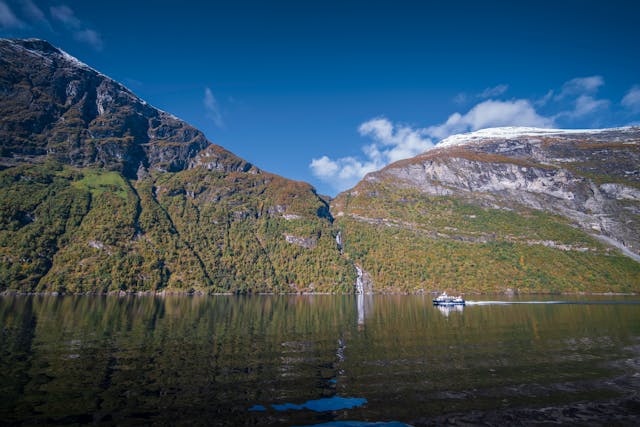

Travel from London to the Norwegian fjords without flying. Trains, ferries, and scenic routes make this slow journey unforgettable.
Flying might be the fastest way to travel, but it’s definitely not the most exciting. Picture this instead: starting your journey in bustling London and ending up surrounded by towering cliffs and cascading waterfalls in Norway’s famous fjords, all without stepping foot on a plane. This overland adventure combines overnight trains, scenic ferries, and stunning coastal routes that turn the journey itself into the main attraction.
Taking the slow route through Europe means watching the landscape transform from English countryside to Dutch windmills, then Scandinavian forests, and finally those dramatic Norwegian peaks. It takes longer than a two-hour flight, sure, but the memories collected along the way are worth every extra hour spent watching the scenery roll past your window.
What You'll Discover:
Getting Started: London to Amsterdam by Train
The adventure kicks off at London’s St Pancras International station, where the Eurostar whisks travelers under the English Channel to Brussels or Amsterdam. The direct service to Amsterdam takes about four hours, and there’s something oddly satisfying about having breakfast in London and lunch in the Netherlands without dealing with airport security lines or cramped airplane seats.
The train glides through the English countryside, dips underground beneath the Channel, then emerges in continental Europe where the flat landscapes and orderly fields signal the arrival in the Low Countries. Amsterdam makes a perfect first stop, giving travelers a chance to stretch their legs, rent a bike, and explore the canal-ringed city before continuing north. The city’s compact size means even a brief layover allows time to see the major sights or simply grab some stroopwafels and people-watch along the waterfront.
Through Germany and Denmark: The Scenic Route North
From Amsterdam, the journey continues through Germany toward Denmark, and this is where the trip really starts feeling like an adventure rather than just transportation. Overnight trains run from Amsterdam through Hamburg and up to Copenhagen, letting travelers wake up in a completely different country without losing precious daylight hours. The Danish capital deserves more than a quick pass-through, with its colorful Nyhavn harbor, impressive castles, and that famous Little Mermaid statue that somehow manages to be both underwhelming and charming at the same time.
After exploring Copenhagen, travelers can hop on a train that crosses the Øresund Bridge, that incredible engineering marvel connecting Denmark to Sweden, offering panoramic views of the sea below. The landscape gradually shifts from Danish flatlands to Swedish forests, with small red houses dotting the countryside like something straight out of a storybook.
Into Sweden and the Gateway to Norway
Sweden’s west coast provides the perfect transition between central Europe and the dramatic scenery that awaits in Norway. The train journey from Copenhagen to Gothenburg takes about four hours, following the coastline and passing through charming Swedish towns that look almost too picturesque to be real. Gothenburg itself offers fantastic seafood, interesting museums, and a laid-back vibe that makes it easy to spend an extra day exploring before the final push toward Norway.
From here, travelers can either take a direct train to Oslo or head straight for the fjord region by combining trains and buses. The route progressively becomes more beautiful as the terrain becomes hillier and the forests thicker, building anticipation for what’s coming next. Small villages appear between stretches of wilderness, each one looking like it could hide trolls in the nearby woods.
The Grand Finale: Norwegian Fjords by Land and Sea
Reaching the Norwegian fjords without flying requires some planning, but the payoff is absolutely spectacular. Trains from Gothenburg or Oslo connect to smaller lines heading toward Bergen, Norway’s gateway to the fjords, and this is where the real magic happens. The Bergen Railway is considered one of the world’s most beautiful train journeys, climbing through mountains, past frozen lakes, and across the barren Hardangervidda plateau before descending toward the coast.
Once in Bergen, the fjord experience can really begin, whether that means taking local buses along precipitous clifftop roads or boarding one of the many ferries that ply the waters. Nothing quite compares to the experience of being on a fjord cruise, gliding between vertical rock walls that rise straight from the water, passing tiny villages accessible only by boat, and watching waterfalls tumble down from heights that make your neck hurt from looking up.
Conclusion
Traveling from London to the Norwegian fjords without flying turns a simple trip into an unforgettable European adventure. Each leg of the journey offers its own rewards, from the efficient Eurostar to the stunning Bergen Railway, and every border crossing brings new languages, foods, and landscapes to discover.
The slower pace allows travelers to actually see Europe change rather than just teleporting between airports, and the reduced carbon footprint doesn’t hurt either. This overland route proves that sometimes the best way to reach a destination is to enjoy every single kilometer getting there, collecting stories and scenery that no flight could ever provide.