
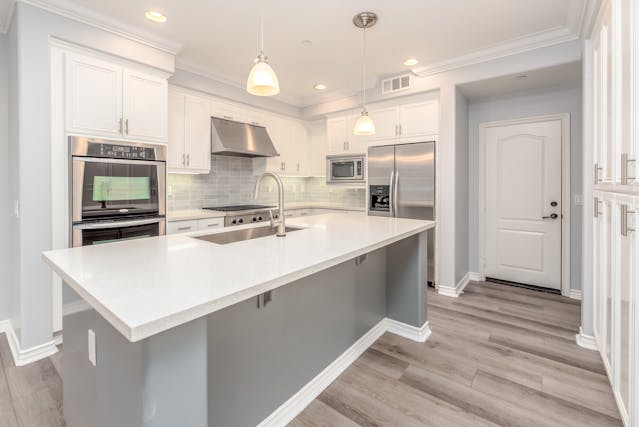

A dark kitchen has a sneaky way of affecting everything. You start avoiding the space, cooking feels like a chore, and even a clean counter can look a little gloomy when the light is working against you. The good news is that brightening a kitchen is rarely about one big, dramatic change. It is usually a series of smart decisions that help light move, reflect, and land where you actually need it. If you want a kitchen that feels more open, more inviting, and easier to live in, start with these practical upgrades and design tweaks, then use them as a roadmap if you decide to modernize outdated kitchens later on.
Before you do anything else, take a beat and notice when your kitchen looks its best. Is it brighter in the morning, but dimmer by late afternoon? Do the corners stay shadowy no matter what time it is? Those clues tell you whether you need to focus on natural light, better fixtures, or surfaces that stop swallowing the glow.
And if you are collecting ideas while you plan, it helps to see how design pros think about layout, finishes, and lighting together, not as separate projects. A solid example of that whole-room mindset can be found onmhttps://www.northeastdesignbuild.com, which highlights how multiple small choices can add up to a noticeably brighter kitchen.
What You'll Discover:
1) Let Daylight Do the Heavy Lifting
Natural light is the easiest light to live with. It makes colors look better, food prep feels more pleasant, and the whole room reads as cleaner and more open.
Start with what is blocking the window
A surprising number of kitchens are dark simply because the window is fighting heavy treatments. Swapping thick curtains for lighter, airier coverings can change the vibe immediately. Even if you need privacy, you can often get it with a shade that still lets daylight filter through. The goal is not to expose the whole room. The goal is to stop smothering the sun.
Think bigger if the space truly lacks daylight
If the kitchen has tiny windows or the layout limits where openings can go, that is when a larger renovation can make a dramatic difference. Expanding a window or adding a skylight can transform how the entire room feels, especially in kitchens that always look like evening even at noon.
2) Choose Surfaces That Bounce Light Around
A dark kitchen is often a reflection problem, literally. Light enters the space, then gets absorbed by flat, deep tones and matte finishes.
Gloss and polish can be your best friend
You do not need everything shiny, but a few reflective surfaces help a lot. Polished countertops, a gently glossy backsplash, or cabinetry with a soft sheen can spread light deeper into the room. Materials like quartz and certain stones naturally help with this because they catch and reflect rather than flattening everything.
Prefer matte? Go lighter, not heavier
If you love a matte look, keep it, just lighten it up. Pale grays, warm off-whites, and soft beiges brighten the room without glare. The trick is choosing tones that reflect rather than absorb, so the kitchen still feels calm but no longer cave-like.
3) Build a Lighting Recipe, Not a Single Fix
Overhead lights alone rarely solve a dark kitchen. You can have one bright fixture and still end up with shadowy counters, dim corners, and that uneven feeling that makes the space look smaller.
Layer light the way you layer clothing
A balanced kitchen usually has three types of lighting working together: ambient light to fill the room, task lighting where you work, and accent lighting that adds warmth and depth. Pendant lights above an island, recessed lighting for general coverage, and under-cabinet lighting for counters is a classic combination for a reason.
Make it feel intentional, not tacked on
When lighting is planned as part of the design, it lands in the right places and looks like it belongs. When it is added later, you often end up with weird shadows and fixtures that feel random. Even small upgrades like under-cabinet LEDs can look high-end if placement and color temperature are chosen thoughtfully.
4) Add Glass to Lighten Visual Weight
Sometimes the kitchen is technically bright enough, but it still feels heavy. That usually comes from large, solid blocks of cabinetry and bulky visual lines that make the room feel boxed in.
Glass-front cabinets can open the room without losing storage
Swapping a few solid cabinet doors for glass inserts breaks up the wall of cabinetry and creates depth. It also gives light a chance to bounce around instead of stopping dead at a row of flat doors.
Consider glass in unexpected places
Glass shelving, a light-filled display area, or even an interior glass detail that lets light pass between rooms can be a game-changer. You keep the separation where you need it, but the light still travels.
5) Use Color Strategically, Without Turning the Kitchen Into a Snowstorm
Light colors are the obvious answer, but a kitchen that is all white can feel stark fast. Bright does not have to mean clinical.
Warm neutrals are usually the sweet spot
Soft warm neutrals and gentle pastels reflect light beautifully and still feel inviting. If your kitchen is already lacking sunlight, warmer tones can keep it from feeling cold, even when the palette is light.
Use contrast to keep it grounded
A bright kitchen often looks best with a little contrast. Warm wood floors, muted stone counters, or a slightly deeper island color can keep the room from feeling flat. The goal is balance: airy, but still cozy.
6) Fix the Flow So Light Can Travel
Sometimes the issue is not the finishes or fixtures. It is the layout. If the kitchen is cluttered, chopped up, or blocked by tall elements in the wrong places, light cannot move naturally through the room.
Remove visual roadblocks
A bulky cabinet run, a poorly placed tall pantry, or an awkward island orientation can create constant shadows. Adjusting placement can improve both movement and brightness because light has a clear path.
Open sightlines where you can
Even small layout tweaks can make a kitchen feel brighter, because your eye reads the space as larger. Wider walkways, a more open connection to a dining area, or a cleaner transition into an adjacent room can all help the kitchen feel less closed in.
7) Finish With Small Details That Sparkle
This is the fun part. Once the big decisions are working in your favor, smaller updates start to have a noticeable impact.
Hardware and fixtures matter more than people think
Reflective hardware, brighter finishes, and statement light fixtures can lift the entire look. The key is not to overload the kitchen with shiny objects. Select a few pieces that naturally catch the light and make the room feel more alive.
Hidden lighting adds a quiet glow
Subtle LED strips in toe-kicks, inside drawers, or under cabinets can make the kitchen feel more polished and easier to use. It is not just aesthetic. It also makes nighttime cooking and cleaning feel far less annoying.
A brighter kitchen is not about chasing one perfect hack. It is about stacking smart choices that help light enter, move, reflect, and stay. If you start with daylight, then support it with reflective surfaces, layered lighting, lighter visual weight, and a layout that lets the room breathe, you will feel the difference every single day you walk into the space.