
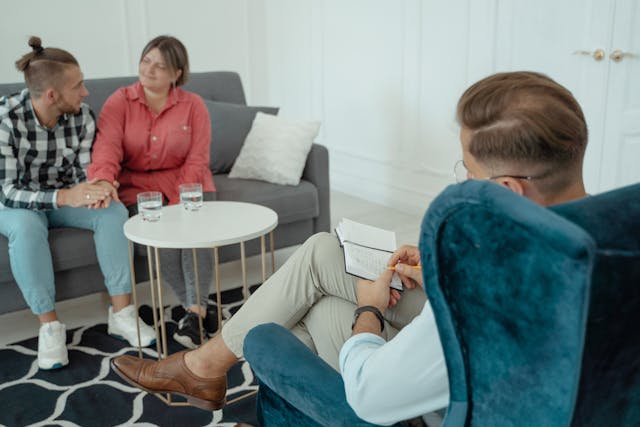

Marriage counseling helps couples break negative cycles, improve communication, and reconnect when conversations feel stuck again
Most couples don’t walk into marriage counseling because they’ve stopped caring. They come in because they care deeply and feel stuck. Conversations go in circles. The same arguments resurface. Small issues turn into big fights, or worse, nothing gets talked about at all.
Over time, frustration replaces curiosity. You stop asking why your partner feels the way they do and start assuming the worst. Counseling steps in at that point to slow things down and help both people reset how they communicate and connect.
What You'll Discover:
Counseling Creates a Safe Place to Talk
At home, it’s hard to speak honestly without triggering old reactions. One comment turns into defensiveness. Another leads to shutdown. Before long, you’re arguing about tone instead of the actual issue.
Counseling changes the environment. It gives each person time and space to speak without interruption. A counselor keeps the conversation from derailing and helps clarify what’s really being said underneath the frustration.
Often, couples realize they aren’t fighting about chores, money, or schedules. They’re fighting about feeling unappreciated, ignored, or emotionally alone. Once those deeper feelings are named, the tension in the room usually drops. That alone can feel like relief.
Counseling Helps You Understand Your Patterns
Every marriage has patterns, especially under stress. One partner pushes for resolution. The other pulls away. One raises their voice. The other goes silent. These patterns don’t mean the relationship is broken. They usually mean both people are trying to protect themselves in different ways.
Counseling helps you spot these patterns while they’re happening. Instead of blaming each other, you start seeing the cycle you’re both stuck in. That shift matters. When the problem becomes the pattern, not the person, teamwork starts to return.
Couples often say this is the first time they’ve felt like they’re on the same side again. Arguments still happen, but they don’t feel endless or hopeless.
Counseling Rebuilds Emotional and Physical Connection
Distance in a marriage rarely starts with one big event. It builds slowly through missed conversations, unresolved hurt, and long periods of feeling misunderstood. Over time, emotional closeness fades, and physical intimacy often follows.
Counseling helps couples reconnect by addressing what’s been left unsaid. You learn how to talk about needs without criticism. You learn how to listen without preparing a defense. You also learn how to repair after conflict, which is something most couples were never taught.
For marriages affected by betrayal, broken trust, or repeated disappointment, counseling provides structure. Healing doesn’t happen by avoiding the pain or rushing forgiveness. It happens by working through it carefully and honestly, with support.
Counseling Offers Direction, Not Judgment
A common fear is that counseling will turn into a blame session or decide who’s right and who’s wrong. That’s not the goal. Counseling is about understanding what’s happening in the relationship and deciding where you want it to go.
Some couples come in wanting to rebuild and strengthen their marriage with counseling. Others come in unsure if they can continue. Counseling helps bring clarity either way. It replaces emotional chaos with direction and helps both people make decisions based on understanding rather than exhaustion.
Marriage usually doesn’t fall apart overnight. It drifts apart quietly. Counseling helps couples notice that drift and address it before the distance feels permanent.
If you’re even considering counseling, that usually means there’s still care, still hope, and still a desire for something better. And that’s often all you need to take the first step.